
When Disaster Strikes, Drones Become the First Eyes in the Sky
“When roads disappear, communication fails, and every second counts, technology takes flight to deliver hope.”
A New Era of Disaster Response
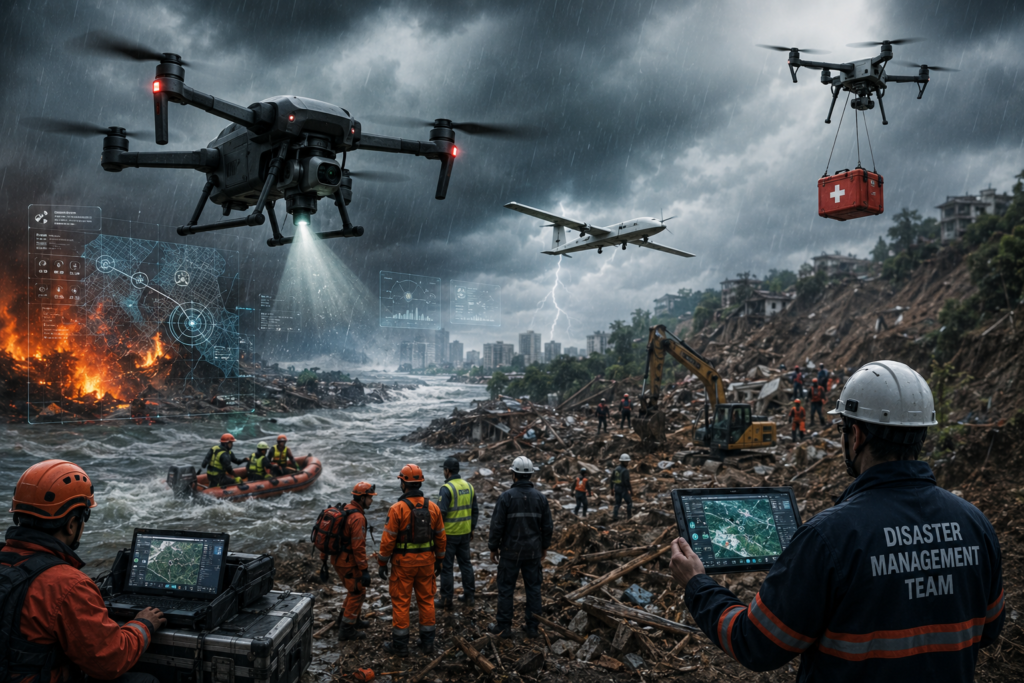
Natural disasters are growing in frequency and intensity, challenging traditional emergency response systems like never before. Floods and flash floods submerge roads and isolate communities. Cyclones, hurricanes, and typhoons leave widespread destruction in their wake. Earthquakes and urban building collapses create dangerous environments where every second can mean the difference between life and death. Landslides cut off remote regions, while tsunamis devastate entire coastlines within minutes. Wildfires spread rapidly across vast areas, threatening lives and ecosystems alike.
Beyond natural disasters, humanity also faces public health emergencies such as pandemics and large-scale maritime disasters, where timely information and rapid response are critical.
In each of these scenarios, one challenge remains the same—reaching people and understanding the situation quickly. This is where drones are redefining disaster management.
Floods and Flash Floods: Reaching the Unreachable
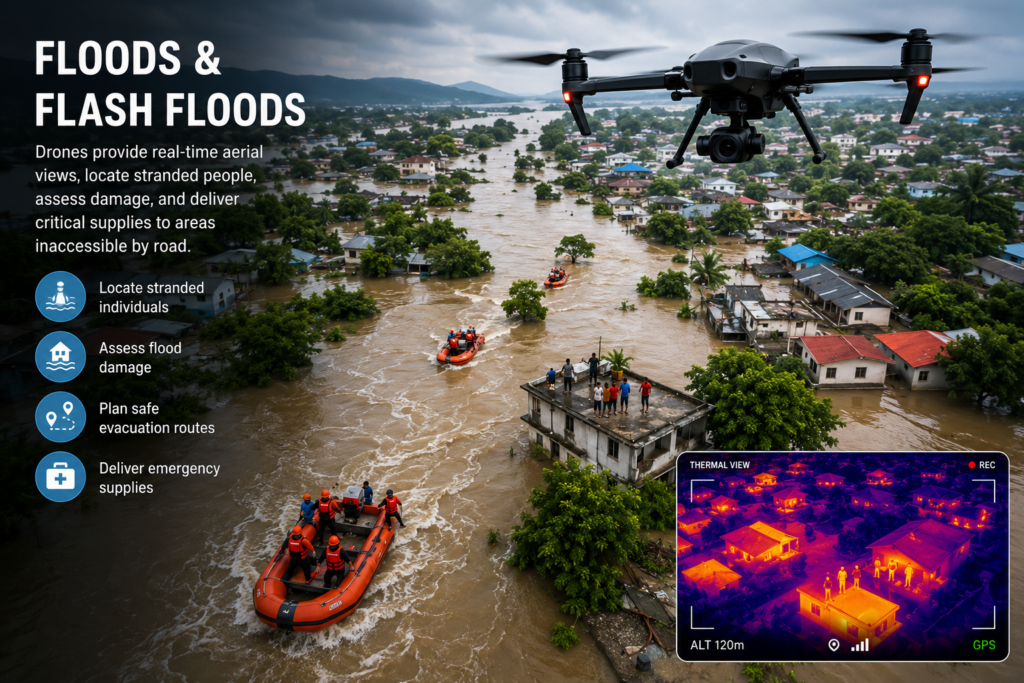
Floods and flash floods can paralyze transportation networks and leave thousands stranded. Drones equipped with high-resolution cameras and thermal sensors provide immediate aerial visibility, helping authorities locate survivors, assess damage to roads and bridges, and identify safe evacuation routes. They can also deliver medicines and emergency supplies to isolated communities where conventional vehicles cannot reach.
Cyclones, Hurricanes, and Typhoons: Assessing Damage Faster
Powerful storms often disrupt communication networks and destroy critical infrastructure. After the winds subside, drones become invaluable tools for rapidly surveying affected regions. They help emergency teams evaluate damage, locate blocked roads, identify survivors, and support recovery operations without exposing personnel to unnecessary risks.
Earthquakes: Saving Lives Under the Rubble
Earthquakes strike without warning, collapsing buildings and trapping victims beneath debris. Entering unstable structures can be extremely dangerous for rescue personnel. Equipped with thermal imaging and advanced cameras, drones provide a safer and faster way to inspect affected areas, search for survivors, and create detailed maps that guide rescue teams.
Landslides: Navigating Dangerous Terrain
Landslides frequently occur in mountainous and hilly regions, blocking roads and isolating communities. Drones enable responders to inspect unstable slopes, assess damage, and identify safe access routes. Their ability to operate over hazardous terrain significantly improves the speed and effectiveness of rescue operations.
Urban Building Collapse: Eyes Inside Dangerous Structures
Structural failures, explosions, and aging infrastructure can result in catastrophic building collapses. Drones equipped with thermal sensors and obstacle-avoidance systems can enter confined spaces, inspect damaged structures, and help locate trapped individuals without risking additional casualties among rescue personnel.
Tsunamis: Rapid Coastal Assessment
Tsunamis can devastate coastal communities within minutes, leaving destruction across vast areas. Drones provide emergency responders with real-time aerial intelligence, helping assess damage, locate survivors, identify isolated communities, and support relief efforts in areas where communication systems have failed.
Wildfires: Fighting Fire with Technology
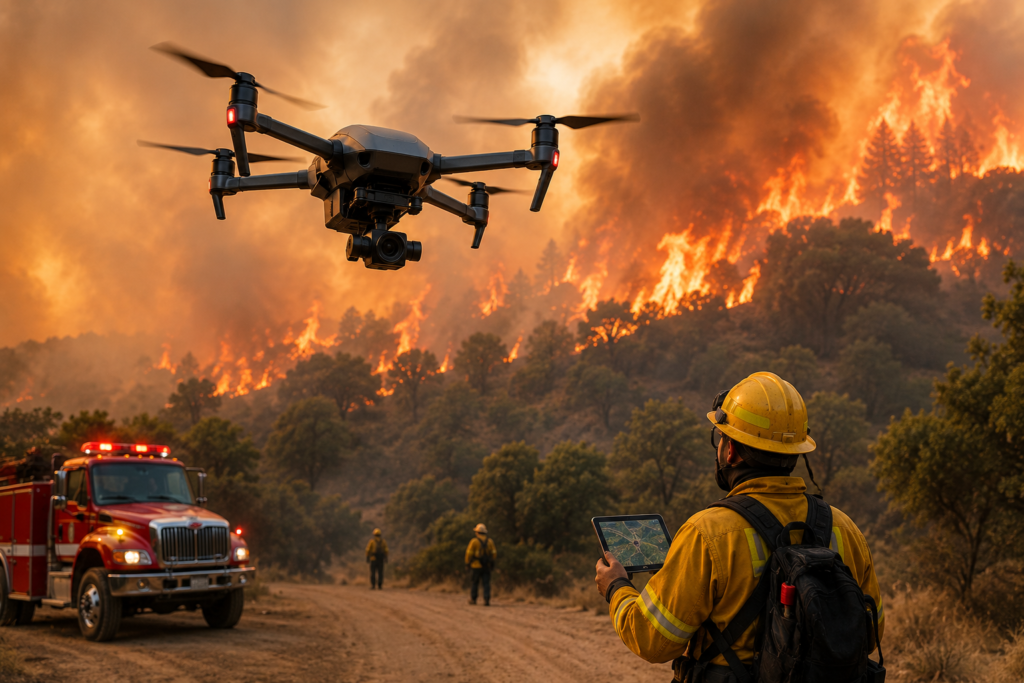
Wildfires are among the most unpredictable disasters. Dense smoke and rapidly changing conditions make firefighting operations extremely challenging. Thermal imaging drones help detect hotspots, monitor fire spread, support evacuation planning, and enhance firefighter safety by providing critical real time information from above.
Pandemics: Supporting Healthcare and Logistics
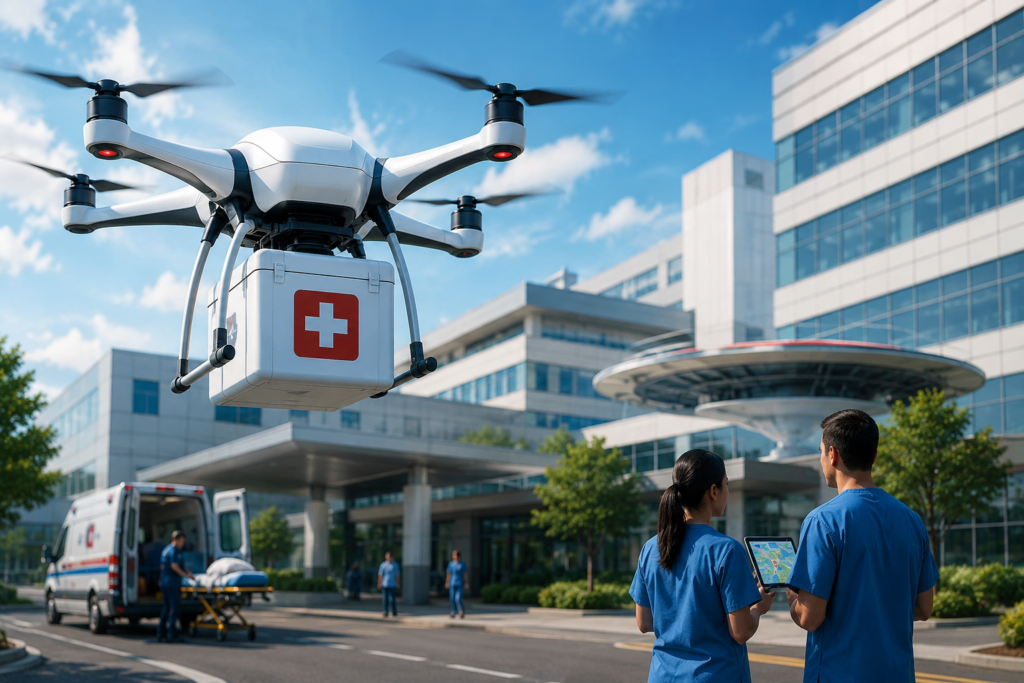
The role of drones extends beyond natural disasters. During pandemics, drones have proven invaluable for transporting vaccines, medicines, blood samples, and medical equipment while minimizing human contact. They enable healthcare systems to continue serving communities even during large-scale emergencies.
Maritime Disasters: Search and Rescue Beyond the Shore
Shipwrecks, offshore accidents, and coastal emergencies require rapid response over large water bodies. Drones provide aerial surveillance, detect people overboard, support search-and-rescue operations, and assist authorities in monitoring oil spills and environmental hazards.
The Common Thread: Information Saves Lives
Although every disaster is different, they all share one critical need—situational awareness.
Modern drones equipped with optical cameras, thermal sensors, AI-powered analytics, and advanced mapping capabilities provide emergency responders with a comprehensive understanding of affected areas. They enable authorities to:
- Locate survivors faster.
- Assess damage accurately.
- Monitor evolving threats.
- Plan evacuation routes.
- Deliver essential supplies.
- Improve responder safety.
- Accelerate recovery efforts.
How SKYX Is Helping Build the Future of Disaster Response
At SKYX, we believe that disaster response begins with visibility. Our advanced drone platforms are designed to support operations across floods, cyclones, hurricanes, typhoons, earthquakes, landslides, urban building collapses, tsunamis, wildfires, pandemics, and maritime emergencies.
With capabilities including:
- Long-endurance flight operations.
- High-resolution day and night imaging.
- Thermal payload integration.
- Real-time situational awareness.
- Accurate mapping and surveillance.
- Rapid deployment in challenging environments.
SKYX enables emergency responders, humanitarian organizations, and disaster management agencies to make faster decisions and protect communities when every second matters.
Conclusion
As climate change and global challenges continue to increase the frequency and severity of disasters, the need for intelligent and agile response systems has never been greater.
From floods and flash floods to cyclones, hurricanes, typhoons, earthquakes, landslides, urban building collapses, tsunamis, wildfires, pandemics, and maritime disasters, drones are transforming the way humanity responds to crises.
Because when disaster strikes, hope doesn’t always arrive by road.
Sometimes, it arrives from the sky.