
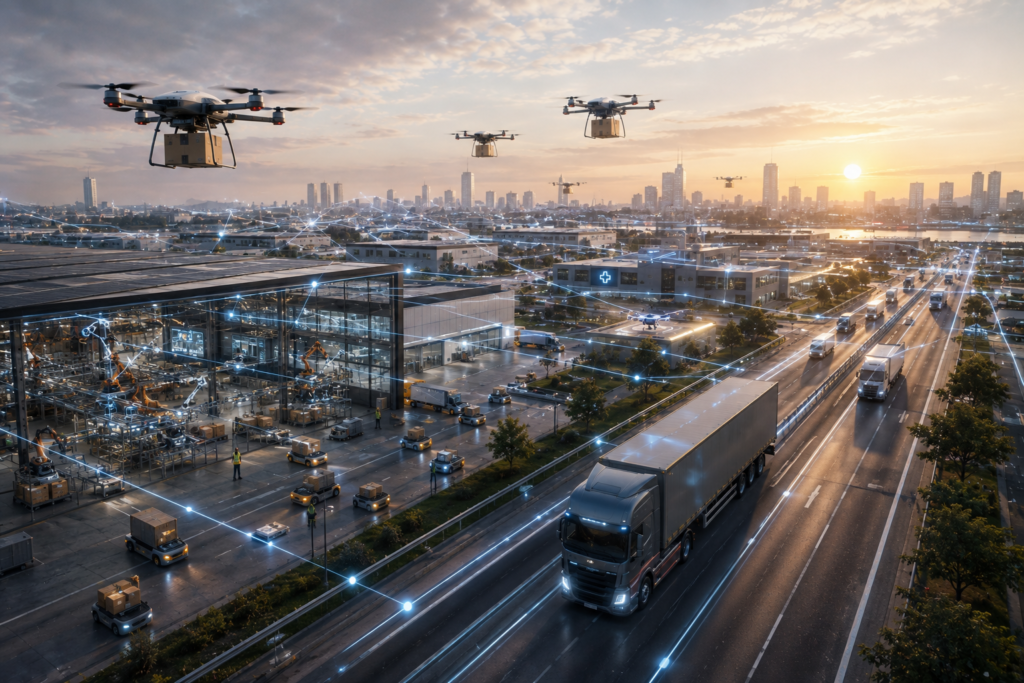
Supply chains are under constant pressure to move faster, operate more efficiently and respond to changing customer expectations. E-commerce has increased delivery volumes, urban congestion continues to affect transportation, and businesses are looking for better visibility across every stage of the movement of goods.
This is where drone technology is emerging as an important part of the modern supply chain.
Drones are no longer limited to aerial photography or surveying. With improvements in sensors, automation, navigation, connectivity and artificial intelligence, drones are increasingly being explored for inventory management, warehouse operations, medical logistics, emergency supply delivery, industrial transportation and last-mile connectivity. DHL identifies drone deliveries, inventory management, security and inspection of large assets as significant logistics applications.
The result is a shift from traditional logistics toward a more connected, data-driven and responsive supply chain.
From Traditional Logistics to Intelligent Logistics
Traditional supply chains depend heavily on trucks, warehouses, workers and fixed transportation routes.
A typical journey may look like:
Manufacturer → Warehouse → Distribution Centre → Delivery Vehicle → Customer
While this model remains essential, every stage can be affected by traffic, labour availability, road conditions, delays and inaccurate inventory information.
Drone technology introduces another layer.
Instead of relying on a vehicle for every movement, companies can use drones where aerial transportation provides a practical advantage. Drones can travel directly between selected locations without being constrained by conventional road networks, making them particularly useful for time-sensitive or hard-to-access movements.
The goal is not necessarily to replace trucks.
It is to make the entire transportation network smarter by assigning the right technology to the right task.
- Faster Last-Mile and Time-Sensitive Deliveries
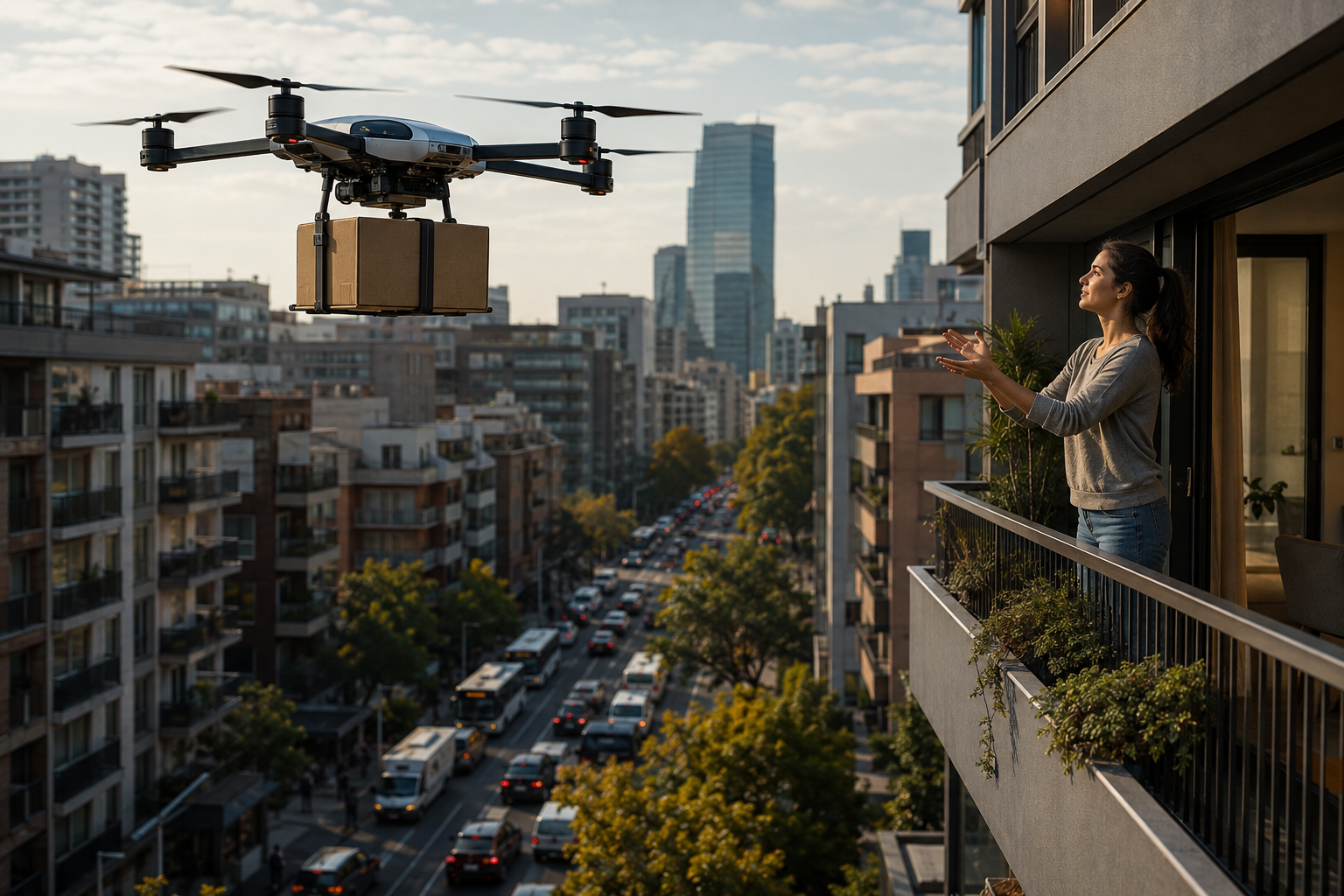
The last mile is often one of the most challenging stages of logistics.
A shipment may travel hundreds of kilometres efficiently before spending significant time navigating the final few kilometres through congested streets.
Drones offer a different approach.
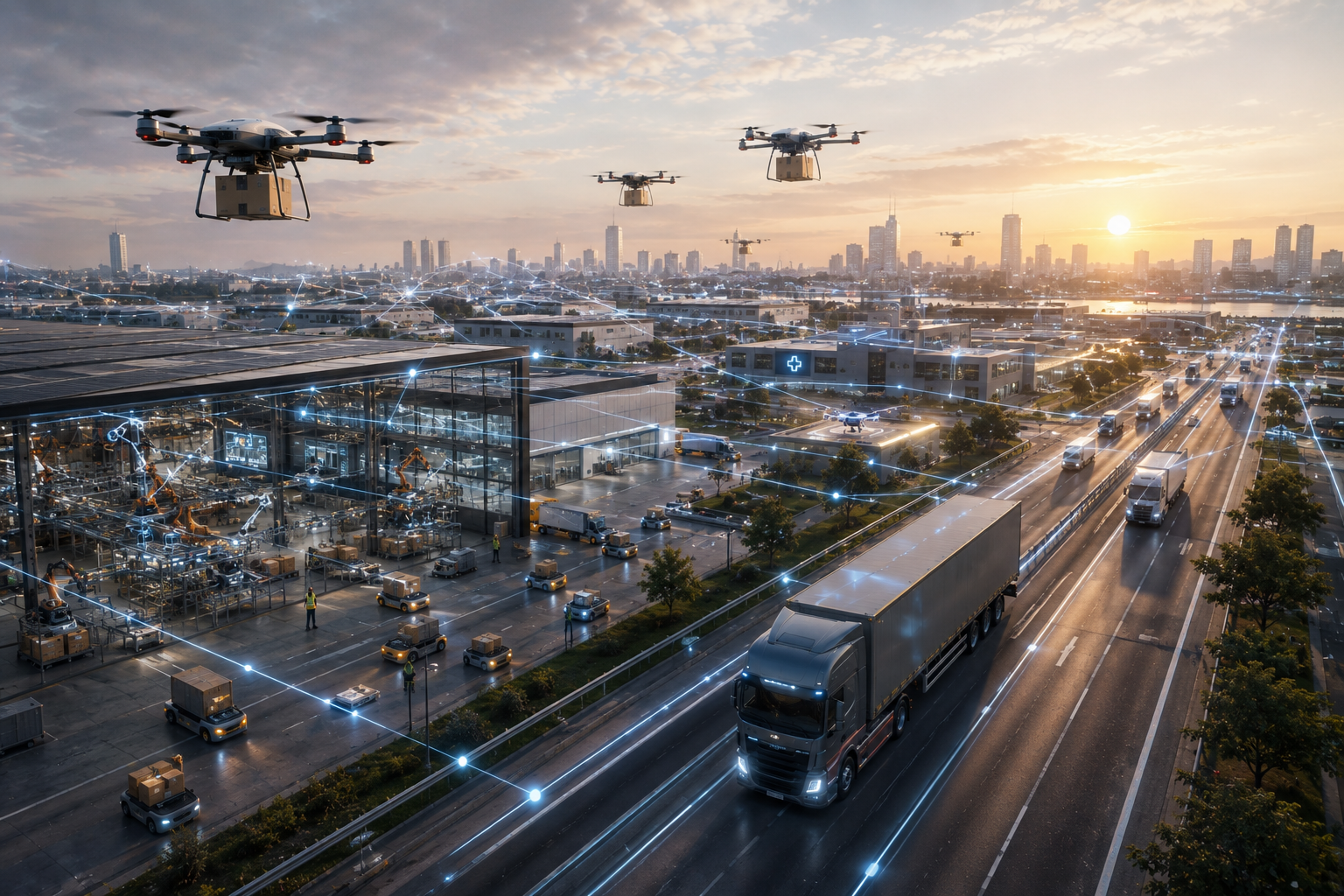
For suitable lightweight and time-sensitive shipments, an aerial route can potentially provide a direct connection between a fulfilment location and a designated delivery point.
This can be particularly relevant for:
- Medical supplies
- Pharmaceutical products
- Emergency materials
- Small high-value components
- Time-sensitive packages
- Remote-area deliveries
The commercial drone delivery market is also moving beyond small-scale demonstrations. In August 2026, Amazon announced plans to expand its Prime Air service to approximately 500 U.S. locations by the end of the year, illustrating the increasing ambition around drone-based delivery networks.
However, drone delivery is not a universal replacement for conventional delivery. Payload, weather, airspace, safety, regulations and suitable landing or drop locations all influence where the technology makes sense.
- Smarter Warehouse Inventory Management
One of the most promising applications of drones may actually happen inside the warehouse.
Inventory counting can be repetitive, time-consuming and difficult when products are stored on high racks.
Traditionally, workers may need to scan products manually or use specialised equipment to access elevated storage locations.
Drones equipped with cameras, barcode scanners and other sensors can potentially automate much of this process.
They can fly through warehouse aisles, capture inventory information and identify discrepancies for human review.
This creates several potential benefits:
More frequent inventory checks
Instead of performing inventory counts only periodically, businesses can move toward more frequent monitoring.
Improved inventory visibility
More frequent data collection can help businesses understand what is actually available, where it is located and whether records match physical stock.
Reduced manual effort
Workers can spend less time performing repetitive counting tasks and more time handling activities that require human judgement.
Improved workplace safety
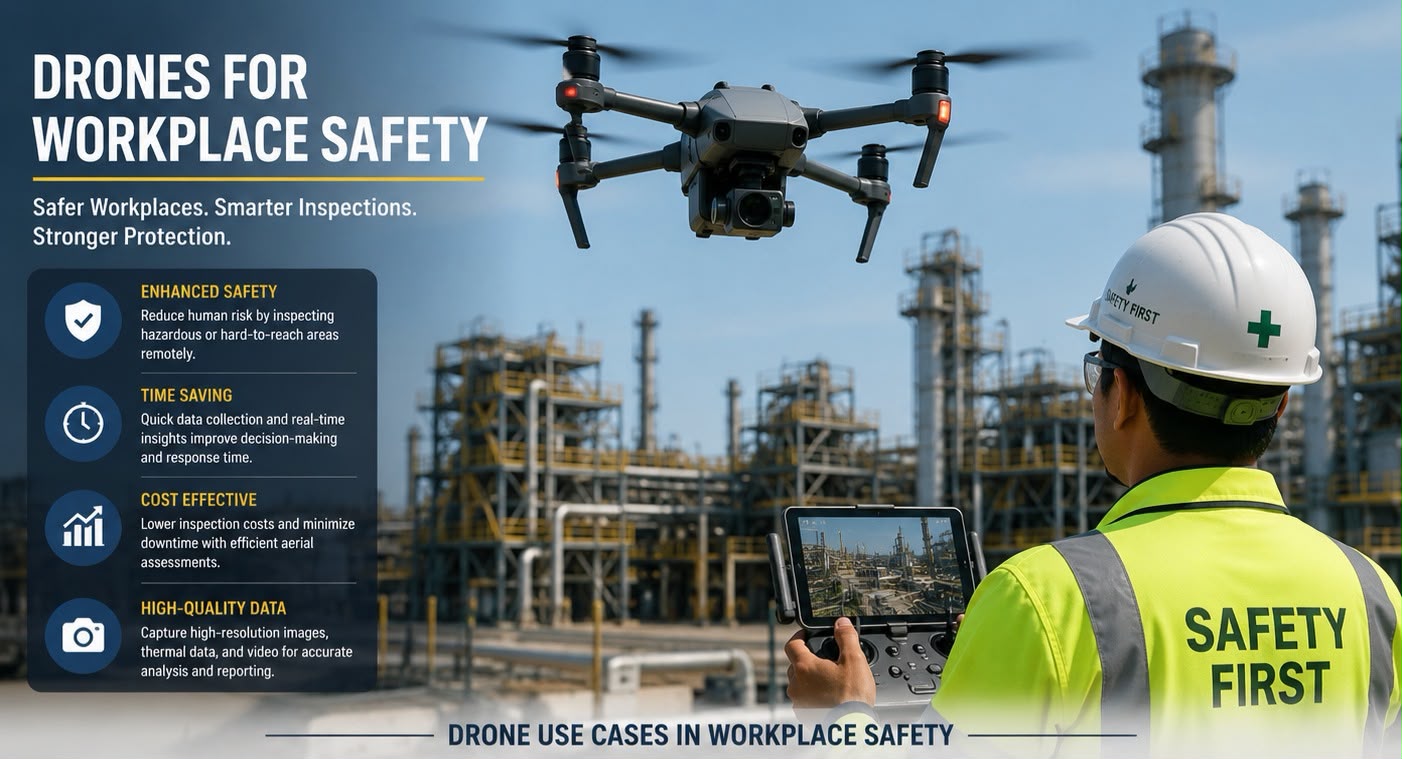
Using drones for high-level inventory scanning can reduce the need for workers to operate at height or use specialised access equipment.
DHL has already tested and deployed drone-based cycle-counting solutions, including systems used with customers such as Dyson.
Recent research and industry experimentation are also exploring autonomous warehouse drones capable of operating during periods when facilities are closed, further demonstrating the potential for continuous inventory monitoring.
- Real-Time Visibility Across the Supply Chain
Modern logistics is not only about moving goods.
It is also about knowing what is happening at every moment.
Drones can collect visual and sensor-based information that can feed into wider logistics systems.
For example, drones can potentially help monitor:
- Inventory levels
- Storage locations
- Stockpile volumes
- Warehouse conditions
- Infrastructure
- Loading and unloading areas
- Remote facilities
- Security conditions
When drone data is integrated with warehouse management systems, IoT platforms, AI and analytics, organisations can move closer to real-time operational visibility.
This is where the real value of drone technology begins to emerge.
The drone becomes more than a flying machine.
It becomes a mobile data-collection platform.
- Connecting the Middle Mile
Most discussions around drone logistics focus on the last mile.
But the middle mile could become equally important.
The middle mile refers to the movement of goods between facilities such as warehouses, distribution centres and fulfilment hubs.
These movements can involve predictable routes and fixed destinations, making certain operations potentially suitable for autonomous systems.
Imagine two facilities located several kilometres apart.
Instead of sending a vehicle through congested roads for every small and urgent shipment, an appropriately designed drone operation could provide a direct aerial connection—subject to payload, weather, airspace and regulatory requirements.
This could be useful in:
Industrial parks
Large campuses
Ports
Warehousing clusters
Healthcare networks
Remote infrastructure
The future could therefore involve a combination of conventional road networks and dedicated aerial logistics routes.
- Drones + AI = Smarter Decision-Making
The biggest transformation may not come from drones alone.
It may come from combining drones with artificial intelligence.
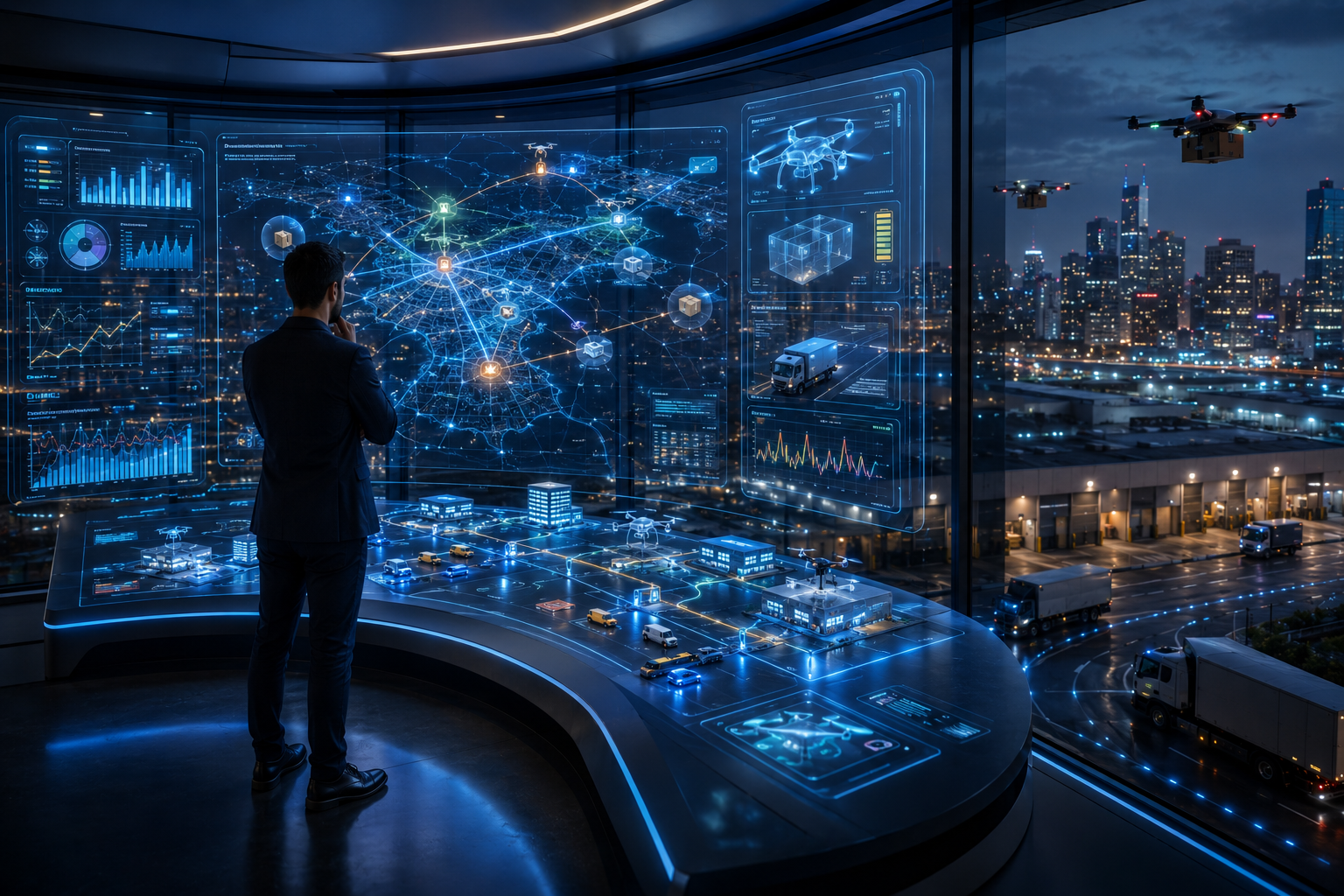
Imagine a supply chain platform continuously monitoring:
- Delivery priorities
- Traffic conditions
- Weather
- Vehicle availability
- Drone battery levels
- Payload requirements
- Warehouse capacity
- Route restrictions
- Customer delivery windows
The system could then recommend the most appropriate transportation method for each shipment.
For example:
Truck → Distribution Centre → Drone → Customer
Or:
Warehouse → Drone → Healthcare Facility
Or:
Manufacturing Unit → Autonomous Ground Vehicle → Production Line
Instead of asking:
“Which vehicle should carry this shipment?”
an intelligent logistics system can increasingly ask:
“What is the most efficient way to move this shipment right now?”
That is the foundation of intelligent logistics.
- Supporting Healthcare and Emergency Logistics
Speed can become especially important when the shipment itself is critical.
Medical facilities may need urgent transportation of medicines, blood samples, diagnostic materials or other essential supplies.
In emergency situations, conventional transportation can be affected by traffic, damaged roads or difficult terrain.
Drones can potentially provide an alternative aerial connection for lightweight and time-sensitive supplies.
The same principle can apply to disaster response, where access to affected locations may be temporarily restricted.
Instead of waiting for conventional transportation routes to become fully accessible, drones can potentially support the movement of essential items where operational and regulatory conditions permit.
This makes drone technology particularly interesting for healthcare, emergency response and remote-area logistics.
- Improving Efficiency and Reducing Unnecessary Movement
A smarter supply chain is not simply one that moves faster.
It is one that moves intelligently.
If a small, urgent component needs to travel a short distance within an industrial facility, sending a large vehicle may not always be the most efficient option.
Similarly, using a large delivery vehicle for every lightweight, time-sensitive shipment can create unnecessary transportation requirements.
Drones can provide another transportation option.
This can help businesses evaluate each movement based on:
Payload + Distance + Urgency + Cost + Accessibility + Safety
The objective is not to make every delivery airborne.
The objective is to select the most appropriate mode for each movement.
- Building a Hybrid Logistics Network
The future of supply chains is unlikely to be:
Trucks vs. Drones
It is more likely to be:
Trucks + Drones + Autonomous Vehicles + Robotics + AI
Each technology has its own strengths.
Trucks
Best suited for high-volume and long-distance transportation.
Autonomous Ground Vehicles
Useful for controlled environments such as warehouses, campuses and industrial facilities.
Drones
Potentially valuable for lightweight, urgent and difficult-to-access movements.
Robotics
Useful for repetitive warehouse and material-handling activities.
AI
Coordinates data, predicts demand and helps determine how resources should be allocated.
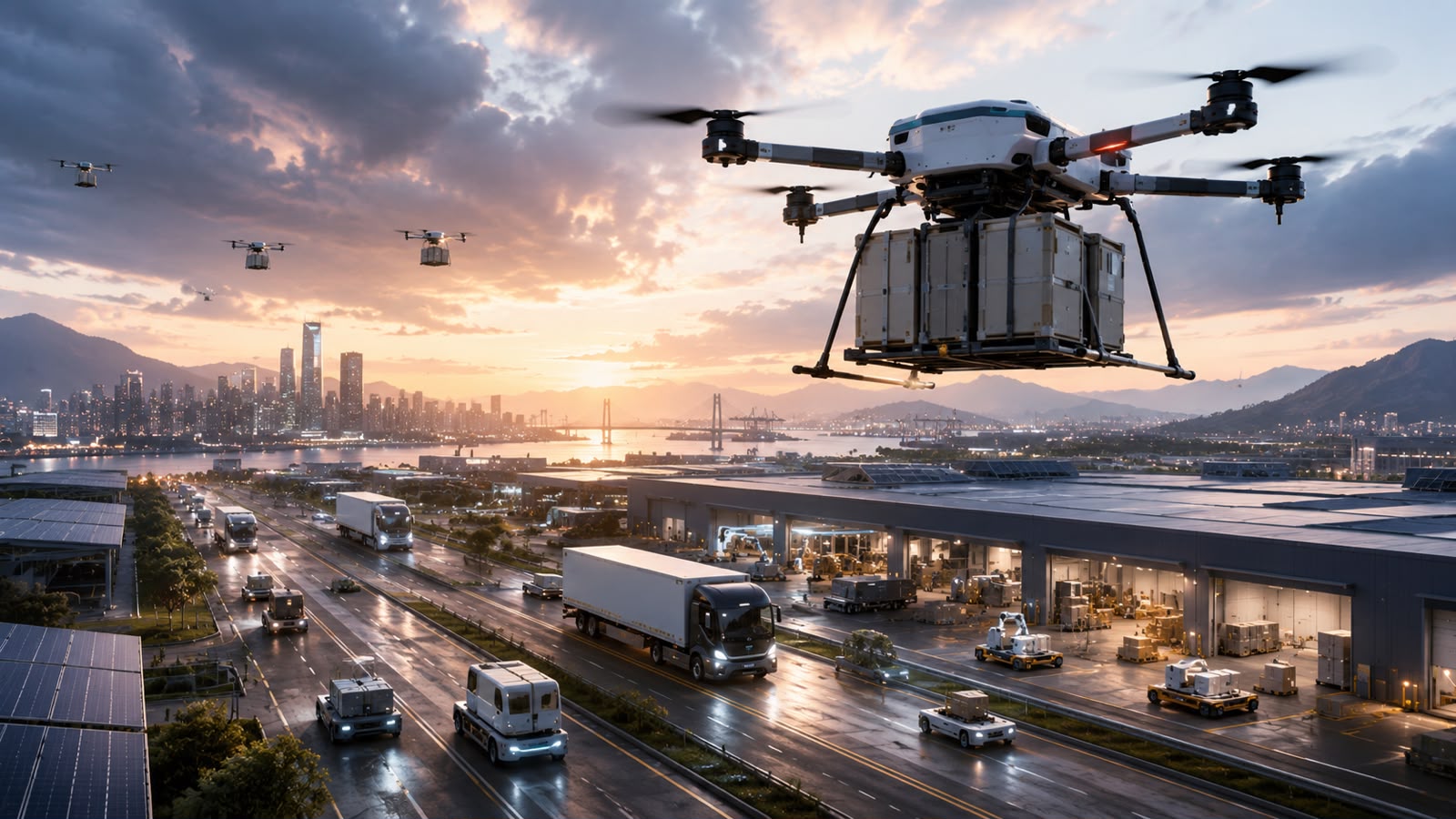
Together, these technologies can create a multi-modal logistics ecosystem.
- The Human Role Will Evolve
Automation does not necessarily mean eliminating people from logistics.
Instead, the nature of logistics work is likely to change.
Instead of spending hours on repetitive inventory counting or routine monitoring, employees can increasingly focus on:
- Exception management
- Decision-making
- System supervision
- Safety
- Customer service
- Fleet management
- Data analysis
DHL similarly highlights the potential for automation to reduce manual inventory work while allowing employees to focus on higher-value activities.
The future supply chain will therefore be less about humans versus machines and more about humans working with intelligent systems.
- Challenges That Supply Chains Must Address
Despite the potential, drone technology is not a magic solution.
Several challenges need to be addressed before large-scale adoption becomes practical.
Regulations and Airspace
Commercial drone operations must comply with applicable aviation regulations, operational requirements and airspace restrictions.
Payload and Range
Drone capability is influenced by payload, battery capacity, weather and operating conditions.
Safety
Autonomous systems must operate reliably around people, buildings, vehicles and other aircraft.
Weather
Wind, rain and extreme weather conditions can affect flight operations.
Cybersecurity
Connected autonomous systems need strong protection against unauthorised access and digital threats.
Infrastructure
Drone operations may require charging systems, landing or delivery infrastructure, fleet-management platforms and appropriate connectivity.
DHL also identifies regulation, social acceptance, cost, safety and operational limitations as important barriers to wider commercial adoption.
The Future: From Transportation to Intelligence
The most important change drones bring to supply chains may not simply be faster transportation.
It is the ability to create a more flexible and intelligent logistics network.
A future supply chain could look like this:
AI identifies demand → Warehouse prepares shipment → Autonomous system selects transportation mode → Drone handles urgent movement → Truck handles bulk transportation → Real-time data tracks the entire journey.
Every technology performs the task it is best suited for.
And every movement generates data that can improve the next decision.
That is how supply chains can become faster and smarter.
Conclusion: The Supply Chain Is Taking to the Skies
Drones are transforming the way businesses think about logistics.
They can support inventory management, improve visibility, connect facilities, accelerate time-sensitive deliveries and provide new options for remote and difficult-to-access locations.
But the real opportunity lies beyond the drone itself.
The future is about connecting drones, trucks, autonomous vehicles, robotics, AI, warehouses and people into one intelligent ecosystem.
The question is no longer simply:
“Can a drone deliver a package?”
The bigger question is:
“How can drones become part of a smarter supply chain?”
As technology, infrastructure and regulatory frameworks continue to evolve, drones are positioned to become an increasingly important layer of modern logistics.
The future of supply chains may not be about moving everything faster.
It may be about moving the right thing, through the right mode, at the right time.