
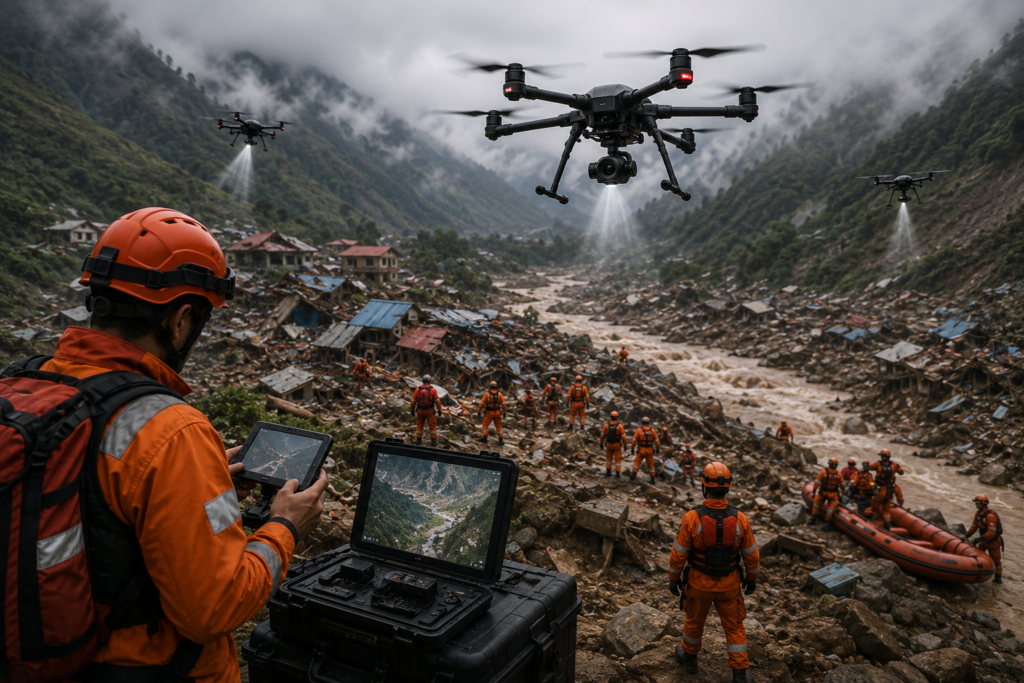
Drones in Rescue Management: Revolutionizing Emergency Response and Saving Lives
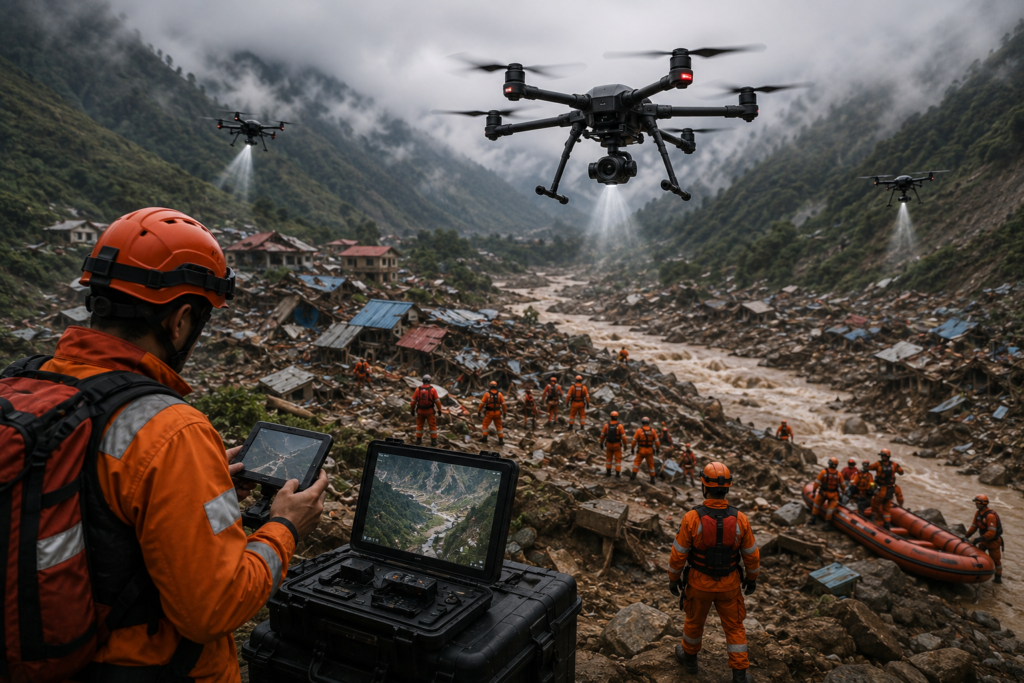
Introduction
In recent years, drone technology has transformed from a recreational gadget into one of the most powerful tools for emergency response and disaster management. Whether responding to natural disasters, locating missing persons, delivering emergency medical supplies, or assessing dangerous environments, drones have become indispensable in modern rescue operations. Their ability to access hard-to-reach locations, provide real-time aerial intelligence, and reduce risks to rescue personnel has significantly improved the speed and effectiveness of emergency response worldwide.
As climate change increases the frequency of floods, cyclones, wildfires, earthquakes, and other disasters, emergency response agencies are constantly seeking innovative technologies that enhance operational efficiency. Among these technologies, Unmanned Aerial Vehicles (UAVs), commonly known as drones, stand out as one of the most impactful advancements. Their versatility, affordability, and rapid deployment capabilities have revolutionized rescue management across the globe.
Understanding Rescue Management
Rescue management refers to the systematic planning, coordination, and execution of operations aimed at saving lives during emergencies and disasters. These operations include:
- Search and rescue missions
- Disaster assessment
- Medical emergency response
- Firefighting support
- Flood rescue
- Earthquake response
- Avalanche rescue
- Mountain and wilderness rescue
- Maritime rescue
- Humanitarian relief operations
Traditionally, rescue teams relied on helicopters, rescue boats, search dogs, and ground personnel. While effective, these methods often involve significant costs, longer response times, and greater risks to rescuers. Drones complement these traditional approaches by providing rapid aerial support, accurate situational awareness, and real-time communication.
The Role of Drones in Rescue Operations
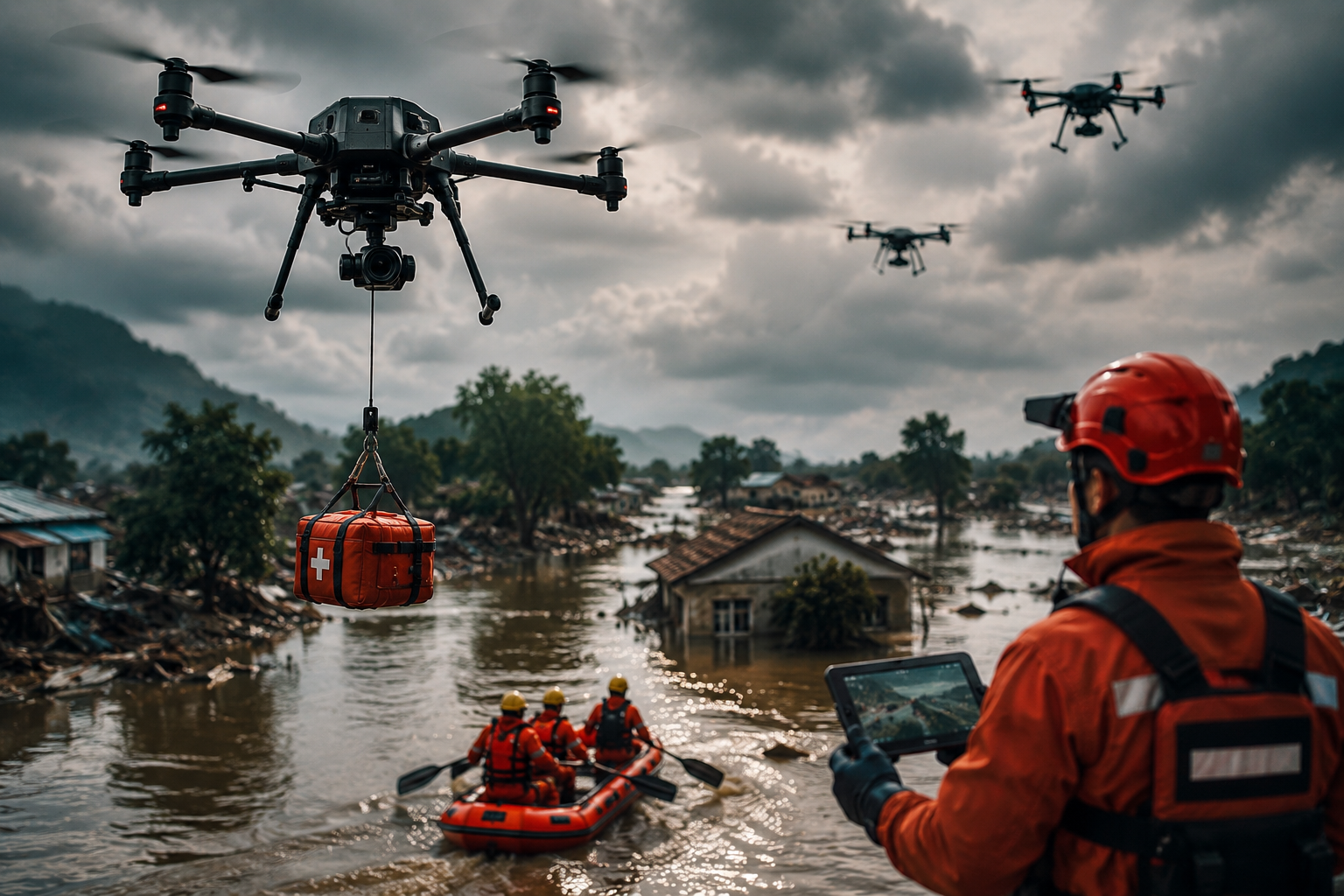
Drones act as the “eyes in the sky” during emergencies. Equipped with advanced cameras, thermal imaging sensors, GPS systems, LiDAR, loudspeakers, and AI-powered analytics, they gather critical information that enables rescue teams to make informed decisions.
Some drones can fly autonomously using pre-programmed flight paths, while others are remotely piloted by trained operators. Modern rescue drones can remain airborne for extended periods, carry payloads, operate in challenging weather conditions, and transmit live video feeds to command centers.
Their ability to collect accurate information within minutes can mean the difference between life and death.
Key Applications of Drones in Rescue Management
Search and Rescue Missions
One of the most valuable applications of drones is locating missing individuals.
People can become trapped during:
- Earthquakes
- Landslides
- Forests
- Mountains
- Floods
- Snowstorms
- Desert regions
Traditional searches may take hours or even days. Rescue drones equipped with thermal cameras detect body heat even in darkness, smoke, dense forests, or rubble.
For example, during nighttime rescue missions, drones can quickly scan large areas while identifying heat signatures that may indicate trapped survivors.
This dramatically reduces search time and increases survival rates.
Disaster Assessment
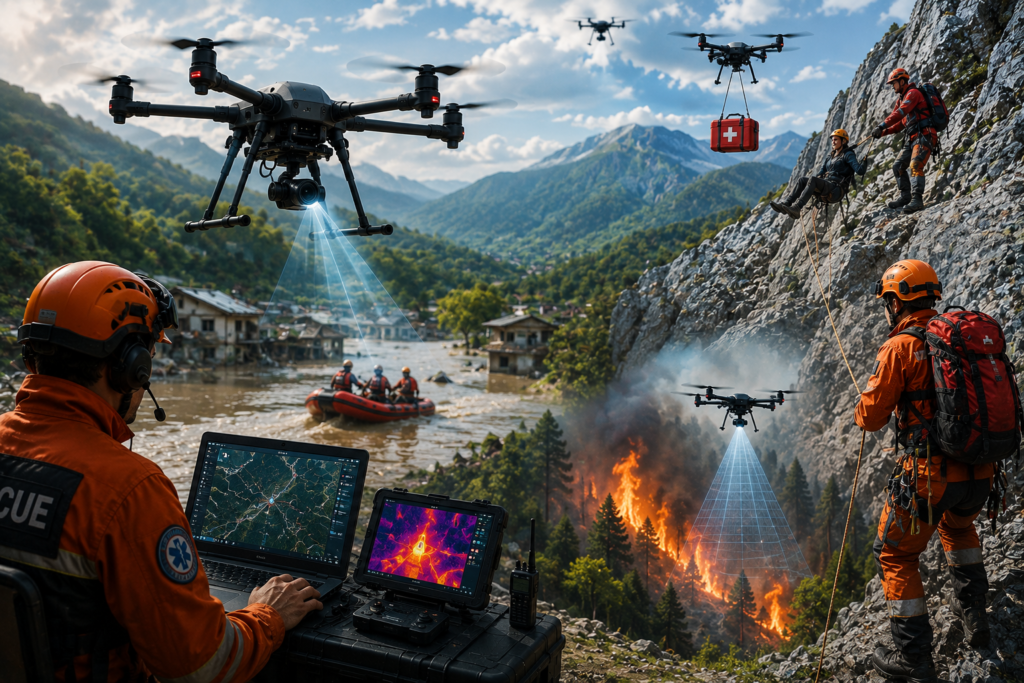
Immediately after disasters, emergency authorities need accurate information about the affected area.
Drones provide:
- High-resolution aerial photographs
- Live video streaming
- Damage mapping
- Infrastructure assessment
- Flood level estimation
- Road accessibility reports
Instead of waiting for ground teams to inspect dangerous locations, drones deliver comprehensive aerial intelligence within minutes.
Authorities can prioritize rescue efforts based on real-time information rather than assumptions.
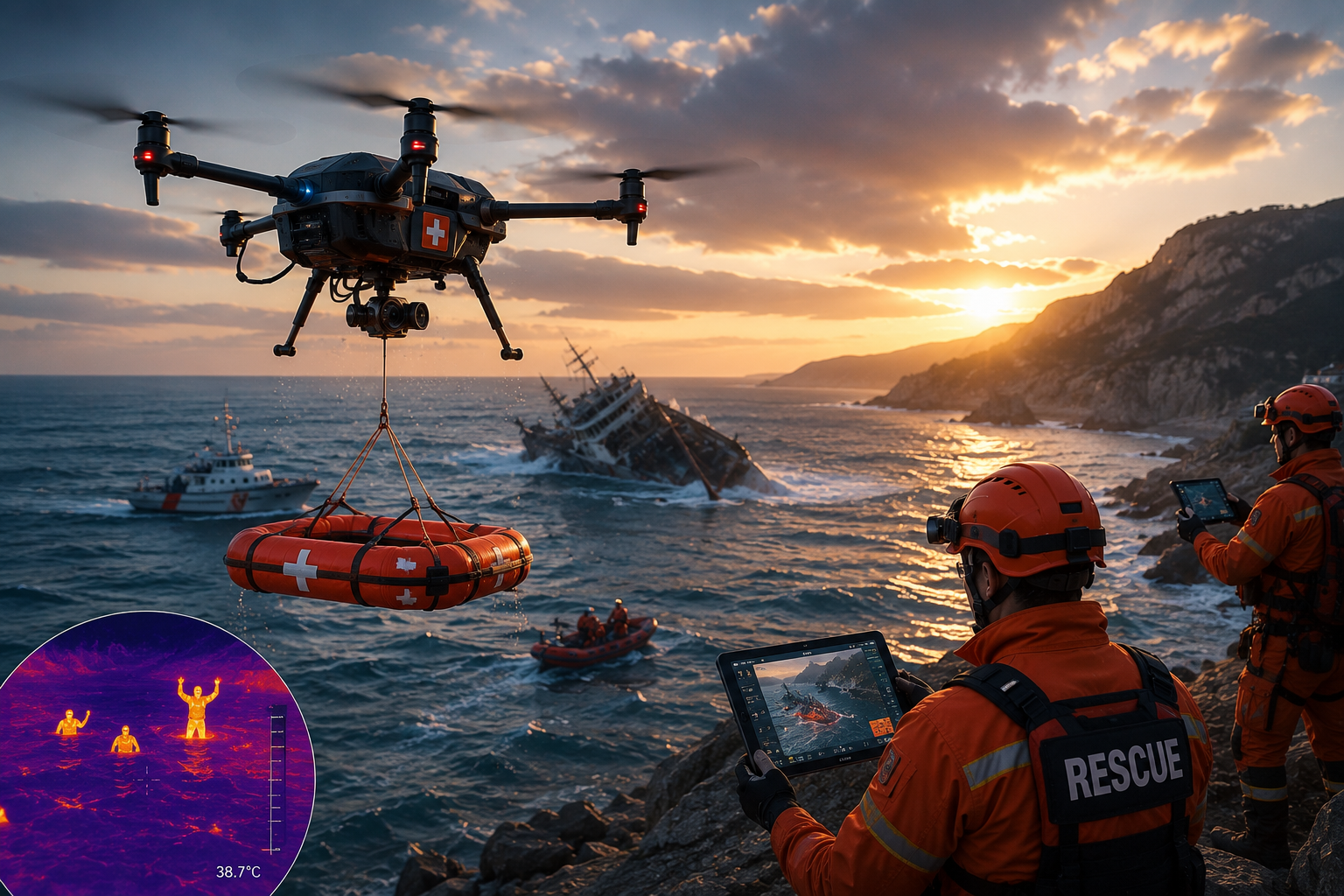
Flood Rescue Operations
Floods remain among the world’s deadliest natural disasters.
Floodwaters often make roads impassable, isolate communities, and endanger rescue teams.
Drones assist by:
- Identifying stranded individuals
- Monitoring water levels
- Delivering life jackets
- Carrying emergency medicine
- Transporting food supplies
- Guiding rescue boats
Some advanced drones can even drop flotation devices directly to victims waiting for rescue.
Wildfire Monitoring
Wildfires spread rapidly and create dangerous conditions for firefighters.
Rescue drones monitor:
- Fire intensity
- Wind direction
- Smoke movement
- Escape routes
- Fire spread prediction
Thermal imaging cameras allow firefighters to identify hidden hotspots that are invisible to the human eye.
This improves firefighter safety while helping contain fires more efficiently.
Earthquake Response
Earthquakes often leave collapsed buildings, blocked roads, and unstable structures.
Sending rescuers into partially collapsed buildings can be extremely dangerous.
Small drones can fly through:
- Broken windows
- Narrow openings
- Collapsed structures
- Underground tunnels
They search for survivors, identify hazards, and provide rescuers with critical information before personnel enter unsafe environments.
Medical Supply Delivery
During emergencies, every minute counts.
Drones can rapidly transport:
- Blood units
- Vaccines
- Defibrillators (AEDs)
- Emergency medicines
- First-aid kits
- Oxygen supplies
Medical delivery drones have already saved lives in remote communities where ambulances cannot reach patients quickly.
This application is especially valuable during pandemics and disaster relief operations.
Communication Support
Natural disasters often damage communication infrastructure.
Without communication:
- Rescue coordination becomes difficult.
- Victims cannot call for help.
- Teams lose situational awareness.
Some drones function as temporary communication relays, restoring network connectivity between rescue teams and emergency operation centers.
Others carry loudspeakers to provide evacuation instructions or reassure trapped victims.
Technologies Powering Rescue Drones
Modern rescue drones integrate multiple advanced technologies:
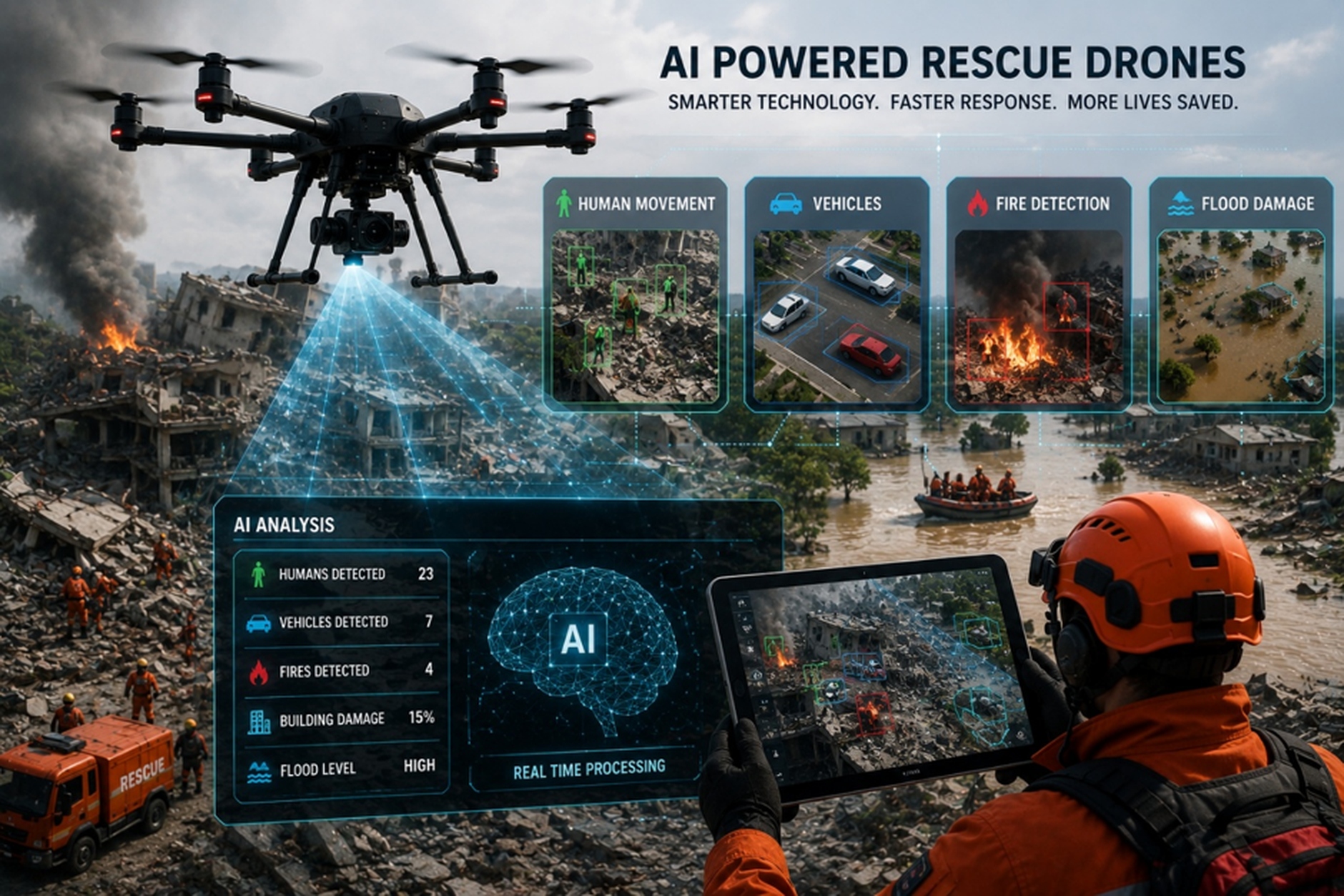
Artificial Intelligence (AI)
AI analyzes aerial imagery to automatically detect:
- Human movement
- Vehicles
- Fire
- Flood damage
- Collapsed buildings
AI significantly reduces the workload of rescue operators.
Thermal Imaging
Thermal cameras identify body heat regardless of lighting conditions.
This technology is especially useful during:
- Night searches
- Dense forests
- Smoke-filled environments
- Earthquake rubble
GPS Navigation
Accurate GPS enables drones to:
- Return automatically
- Follow programmed routes
- Mark victim locations
- Coordinate with rescue teams
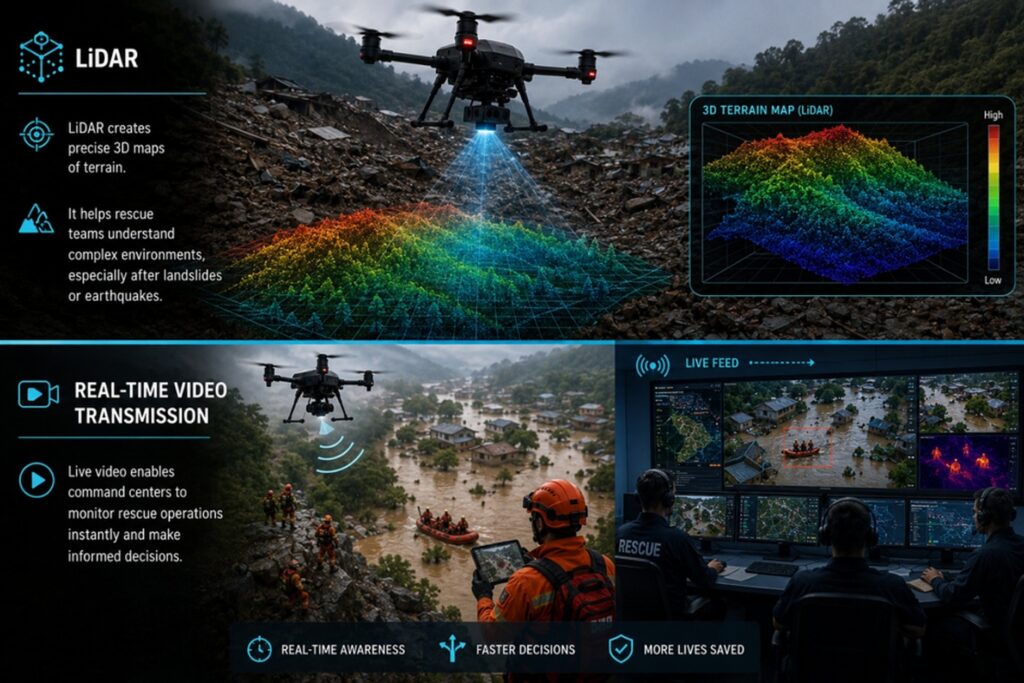
LiDAR
LiDAR creates precise 3D maps of terrain.
It helps rescue teams understand complex environments, especially after landslides or earthquakes.
Real-Time Video Transmission
Live video enables command centers to monitor rescue operations instantly and make informed decisions.
Benefits of Drones in Rescue Management
Faster Response Time
Drones can be launched within minutes, reaching affected areas much faster than ground vehicles.
Improved Safety
They reduce the need for rescue personnel to enter dangerous environments before risks are assessed.
Cost Effectiveness
Compared to helicopters, drones require significantly lower operating and maintenance costs.
Greater Accessibility
They can access:
- Mountain peaks
- Flooded villages
- Dense forests
- Collapsed buildings
- Remote islands
Better Decision-Making
Real-time aerial intelligence allows authorities to allocate resources more effectively.
Continuous Monitoring
Drones provide uninterrupted surveillance throughout rescue missions, helping responders adapt to changing conditions.
Challenges and Limitations
Despite their advantages, drones face certain limitations:
- Limited battery life
- Adverse weather conditions
- Restricted payload capacity
- Regulatory restrictions
- Signal interference
- Requirement for trained operators
- Privacy concerns
- High-end rescue drones can be expensive
Continuous technological advancements are addressing many of these challenges through improved batteries, autonomous navigation, and enhanced communication systems.
Real-World Examples
Several countries have successfully integrated drones into rescue management:
- India: Drones have supported flood relief, landslide assessments, and disaster response by agencies such as the National Disaster Response Force (NDRF).
- Japan: Following earthquakes and tsunamis, drones have been deployed for rapid damage assessment and search operations.
- United States: Emergency responders use drones during hurricanes, wildfires, and missing-person searches to improve situational awareness.
- Switzerland: Mountain rescue teams employ drones equipped with thermal cameras to locate hikers stranded in challenging terrain.
- Rwanda: Medical delivery drones transport blood and essential medical supplies to remote healthcare facilities, demonstrating how drone logistics can save lives.
The Future of Rescue Drones
The future of rescue management is closely linked with advancements in drone technology.
Emerging innovations include:
- Fully autonomous rescue drones
- AI-powered victim detection
- Drone swarms for large-scale disaster coverage
- Longer flight endurance through advanced batteries
- 5G-enabled real-time communication
- Hybrid drones capable of carrying heavier rescue payloads
- Integration with robotics and autonomous ground vehicles
- Predictive analytics for disaster response planning
Researchers are also exploring drones capable of delivering inflatable rescue rafts, establishing temporary communication networks, and supporting coordinated multi-drone operations during major emergencies.
Conclusion
Drones have become a game-changing technology in rescue management, transforming the way emergency responders save lives. Their ability to rapidly assess disaster zones, locate survivors, deliver essential supplies, and provide real-time intelligence makes them invaluable during crises. By reducing response times, improving operational safety, and enhancing situational awareness, drones enable rescue teams to work more efficiently and effectively.
Although challenges such as limited battery life, regulatory requirements, and adverse weather conditions remain, continuous innovation in artificial intelligence, autonomous flight systems, advanced sensors, and communication technologies is expanding the capabilities of rescue drones every year. As governments, humanitarian organizations, and emergency services continue to adopt these technologies, drones will play an increasingly central role in disaster preparedness, emergency response, and humanitarian relief.
Ultimately, drones are not merely technological tools—they are life-saving assets that represent the future of intelligent rescue management. Their integration into emergency operations promises faster responses, safer missions, and improved outcomes for communities affected by